
Performance Max Updates 2026: What’s New and How to Use It the Right Way
Performance Max has become one of the most powerful—and misunderstood—campaign types in Google Ads. By 2026, Performance Max (PMax) is no longer optional. It is a core campaign type powered almost entirely by AI, capable of driving massive reach, conversions, and revenue—if used correctly.
This blog explains what has changed in Performance Max by 2026, how it works now, and how to use it without wasting budget.
What Is Performance Max in 2026?

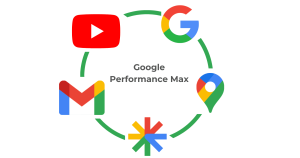
Google Ads Performance Max is an AI-driven campaign type that runs ads across all Google properties from a single campaign.
It shows ads on:
-
Google Search
-
YouTube
-
Display Network
-
Discover
-
Gmail
-
Shopping
Powered by Google’s machine learning, PMax decides where, when, and to whom your ads are shown.
What’s New in Performance Max in 2026?
Performance Max has matured significantly. In 2026, Google introduced more insights, better controls, and deeper AI integration.
Key Updates You Must Know:
1. Better Search Term & Performance Insights

Earlier, PMax was a “black box.”
In 2026, advertisers now get:
-
Improved search theme visibility
-
Channel-level performance insights
-
Clearer asset performance signals
You still don’t get full keyword control—but visibility is much better than before.
2. Stronger Role of Audience Signals

Audience signals are no longer optional hints—they are critical inputs.
AI now relies heavily on:
-
Website visitors
-
Customer lists
-
Conversion data
-
In-market and interest signals
Better signals = faster learning = better performance.
3. Creative Quality Has More Weight Than Ever

In 2026, creatives decide success in PMax.
Google’s AI:
-
Mixes headlines, descriptions, images, and videos
-
Tests combinations across channels
-
Pushes high-performing assets aggressively
Weak creatives = wasted budget
Strong creatives = scalable growth
4. Performance Max vs Search Overlap Control (Improved)
Google has improved how PMax overlaps with Search campaigns.
In 2026:
-
Exact match Search campaigns get higher priority
-
PMax focuses more on expansion and discovery
-
Brand exclusions and controls are more reliable
This makes it easier to run Search + PMax together.
5. Conversion Quality Matters More Than Volume

PMax optimizes for conversion quality, not just numbers.
AI looks at:
-
Conversion type
-
Conversion value
-
User behavior after conversion
Poor-quality leads confuse the algorithm and hurt performance.
How Performance Max Works in 2026 (Simplified)

Performance Max follows this cycle:
-
Collects data (conversions, audiences, creatives)
-
Tests assets across Google channels
-
Learns which users convert best
-
Shifts budget to winning combinations
-
Scales what works
Your job is to guide the system with the right inputs.
What You Control vs What AI Controls

❌ AI Controls:
-
Placements
-
Bidding adjustments
-
Channel mix
-
Real-time optimization
✅ You Control:
-
Conversion tracking
-
Audience signals
-
Creative assets
-
Budget limits
-
Business goals
In 2026, input quality decides output performance.
Best Practices to Use Performance Max in 2026
1. Use PMax Only When Tracking Is Perfect

Never run PMax without:
-
Proper conversion tracking
-
Verified conversion actions
-
Value-based tracking (if possible)
Bad data = bad optimization.
2. Upload Strong Audience Signals

Use:
-
Customer lists
-
Website visitors
-
High-quality converters
This helps AI learn faster and target better users.
3. Invest in High-Quality Creatives

Provide:
-
Multiple headlines & descriptions
-
High-resolution images
-
Short-form videos
-
Clear value propositions
Creatives are the fuel for PMax.
4. Separate Brand, Search, and PMax Strategically

Best practice in 2026:
-
Brand Search → Separate Search campaign
-
High-intent Search → Separate Search campaign
-
Performance Max → Expansion & scaling
Never rely on PMax alone.
5. Give PMax Time to Learn

Avoid constant changes.
Let campaigns run:
-
At least 2–3 weeks
-
With stable budget
-
Without frequent edits
AI needs data to optimize.
Common Performance Max Mistakes in 2026

-
Running PMax without conversion tracking
-
Using weak or generic creatives
-
No audience signals
-
Expecting full control like Search campaigns
-
Judging performance too early
These mistakes cause budget burn without results.
Performance Max: When It Works Best
PMax performs best for:
-
eCommerce businesses
-
Lead generation with strong funnels
-
Brands with existing conversion data
-
Advertisers ready to scale
It struggles when:
-
There’s no data
-
Offers are unclear
-
Landing pages are weak
Performance Max 2026 vs Old PMax
| Earlier PMax | Performance Max 2026 |
|---|---|
| Black box | More insights |
| Less control | Smarter controls |
| Asset-light | Creative-driven |
| Conversion count | Conversion quality |
Final Thoughts
Performance Max in 2026 is not a shortcut—it is a powerful AI engine. When guided with the right data, creatives, and strategy, it can deliver outstanding results. When used blindly, it becomes a budget drain.
Success with PMax comes from:
-
Clean conversion data
-
Strong audience signals
-
High-quality creatives
-
Patience and strategy
AI does the execution—but humans must define direction.